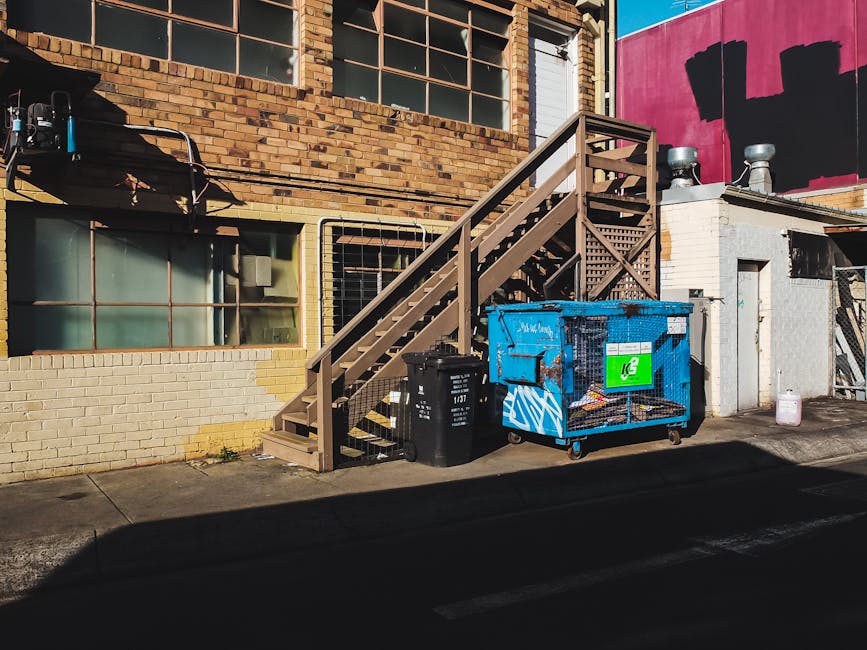
Eltham High Street rubbish removal guide for tight access jobs
If you are dealing with an awkward clearance on a busy stretch like Eltham High Street, you already know the main headache: the rubbish has to go, but the access is tight, the pavement may be narrow, and there is rarely much room to spare. This Eltham High Street rubbish removal guide for tight access jobs walks you through the real-world choices, the planning that saves time, and the methods that work best when a standard collection just will not fit. Whether you are clearing a flat above a shop, a small commercial unit, or a house with a cramped frontage, the goal is the same: remove waste safely, legally, and without turning the whole street into a drama.
In our experience, tight access jobs are rarely difficult because of the waste itself. They are difficult because of the logistics. One poor decision - the wrong vehicle, a badly timed drop-off, a blocked walkway - and a simple job becomes a noisy, stressful faff. The good news? With the right approach, these jobs are very manageable.
Why Eltham High Street rubbish removal guide for tight access jobs Matters
High street properties tend to have awkward practical realities: parked cars, footfall, loading pressures, and very little margin for error. On Eltham High Street, that often means rubbish cannot just be left out front and forgotten. You need a plan that fits the location, not a generic removal method that assumes wide driveways and easy kerbside loading.
This matters because tight access affects almost every part of the job:
- Safety - people still need to walk past, and tradespeople still need space to work.
- Timing - access windows may be short, especially if the site sits near shops or flats.
- Vehicle choice - not every van, skip lorry, or grab vehicle will suit a narrow frontage.
- Cost control - one wasted visit can mean extra labour and avoidable delay.
There is also the neighbour factor. Let's face it, nobody wants bins, broken furniture, or renovation waste hanging about longer than necessary. Good rubbish removal is as much about keeping the street calm as it is about clearing the waste. That is especially true in busy mixed-use spots, where a shopfront and a flat above it may share the same tight access route.
How Eltham High Street rubbish removal guide for tight access jobs Works
For tight access jobs, the removal process usually starts long before the van arrives. A reliable service will want to know what kind of waste you have, how much there is, where it is located, and how the team can safely reach it. That sounds simple, but it makes all the difference.
Typically, the work follows one of three patterns:
- Man and van clearance for smaller or mixed loads that can be carried out quickly by hand.
- Wait-and-load for properties where a vehicle can stop briefly, load up, and leave without leaving equipment behind.
- Specialist loading methods such as smaller trucks, handballing from rear access, or careful staged loading where larger vehicles would struggle.
In practical terms, the trick is to match the waste removal method to the site, not the other way round. If a property has a narrow passage, stairwell access, or a shared courtyard, a full-size skip may be a poor fit. In those cases, wait and load skip hire or man and van collection can be a far better option.
You may also need to think about waste type. Builders' rubble, domestic clutter, white goods, garden waste, office clear-outs, and appliance disposal all behave differently on site. A heavy pile of mixed renovation debris is handled differently from a few bulky items like a sofa and mattress. That is why a quick photo assessment can save so much back-and-forth.
Key Benefits and Practical Advantages
When tight access is handled well, the benefits are immediate. You save time, reduce stress, and avoid the ugly stop-start rhythm that tends to happen when access is underestimated.
- Less disruption - the job is completed in a way that suits the street and the property.
- Faster turnaround - compact, targeted removal often beats waiting for a bulky solution.
- Better control - you can stage rubbish inside, then clear it in a single organised move.
- Reduced risk of damage - fewer heavy vehicle manoeuvres means less chance of scuffed walls, broken paving, or stressed communal areas.
- Cleaner presentation - useful if you are selling, letting, or opening a business unit.
One overlooked benefit is flexibility. Tight access jobs often need to happen at awkward times: early morning before trade deliveries, between tenant handovers, or after a rush period on the high street. A service that understands that rhythm can make the whole thing feel surprisingly smooth. Not glamorous, granted, but smooth.
If you are comparing waste disposal routes, it is worth looking at rubbish removal and the broader skip hire options side by side, because the best choice is not always the most obvious one.
Who This Is For and When It Makes Sense
This guide is most useful if you are dealing with one of the following situations:
- A flat above a shop with stair access only
- A terraced property with a narrow front path or shared side passage
- A small business needing an end-of-lease clear-out
- A renovation project where debris has to move through limited internal access
- A bulky-item clearance where a skip would block the street or simply not fit
It also makes sense if you need to keep the space tidy during the day. A lot of people on busy high streets do not have the luxury of leaving a pile of waste outside for days. And frankly, you probably do not want that either. It invites complaints, creates clutter, and can make a site look much worse than it is.
For homes and smaller clear-outs, domestic skip hire may still work if access is reasonable. For trickier jobs, though, a hand-loaded or short-stay approach usually makes more sense. If you are clearing a loft, garage, or whole house, those access limits can change the plan completely.
Step-by-Step Guidance
Here is the simplest way to plan a tight access rubbish removal job without missing anything important.
- Walk the route first. Check doors, gates, stairs, alleyways, width restrictions, low arches, and any awkward corners. If you need to twist a wardrobe through a narrow hall, you will want to know that before the crew arrives.
- Sort the waste by type. Separate bulky items, general rubbish, heavy material, and anything special such as appliances or confidential material. This makes loading far quicker.
- Measure the access. A rough note on widths, steps, and turning space is often enough for the first planning conversation.
- Check for parking or loading restrictions. On a high street, even a few minutes matter. Consider whether a short loading stop is realistic.
- Choose the right removal method. If a skip cannot be placed safely, look at a man-and-van clear-out, wait-and-load, or a compact vehicle solution.
- Protect internal surfaces. Use floor coverings, corner protection, or simple moving blankets where items pass through narrow areas.
- Load in the right order. Heavy and awkward items go first, lighter waste fills the gaps, and fragile building materials are handled last to avoid breakage.
- Finish with a sweep-through. Check for nails, splinters, dust, and missed fragments. Small bits are easy to overlook, especially when everyone is tired and a bit dusty.
If you are dealing with renovation waste, there is a useful support page on what can go in a skip, which helps you separate general waste from items that need different handling.
Expert Tips for Better Results
These are the kinds of details that tend to make a tough site feel manageable.
- Take photos in daylight. Morning or early afternoon light gives the clearest view of access points. A dim hallway at 7pm can make a narrow route look even narrower.
- Leave the waste near the exit where possible. If items are spread through several rooms, pre-staging them saves a surprising amount of time.
- Avoid overfilling bags or boxes. They become awkward to carry and much harder to manoeuvre through tight turns.
- Keep one clear path open. It sounds obvious, but jobs often go slower because the most direct route ends up blocked by a bin, ladder, or half-dismantled wardrobe.
- Use smaller loading stages. On a tight site, a few controlled trips are safer than one heroic one. Heroic is overrated anyway.
- Ask about loading assistance early. A service with the right equipment may be able to reduce the number of trips or avoid lifting in awkward spots.
Another practical point: if your site also has security concerns or sensitive items, you may want to pair the clearance with confidential shredding. That is especially handy for offices, clinics, or mixed-use premises where paperwork tends to build up in the background.
Common Mistakes to Avoid
Tight access jobs fail for boring reasons more often than dramatic ones. The usual mistakes are easy to avoid once you know what to look for.
- Booking the wrong method. A standard skip is not always the answer, even if it seems cheaper on paper.
- Underestimating the route. One narrow doorway, a low wall, or a shared driveway can change everything.
- Not separating heavy waste. Mixed loads are slower to handle when rubble is buried under lighter clutter.
- Forgetting appliance handling. Fridges, freezers, and some electricals need special attention, not a casual lift and carry.
- Leaving it until the last minute. Same-day solutions can help, but rushed jobs are more likely to trip over access issues.
There is also the classic "it'll be fine" assumption. Usually said with confidence. Usually expensive later. Better to be a little cautious early than to improvise mid-job with a trolley, a prayer, and a bad back.
If bulky furniture is part of the job, dedicated services such as mattress and sofa disposal or fridge and appliance removal can simplify things a lot.
Tools, Resources and Recommendations
You do not need a van full of specialist kit to manage a small clearance, but a few practical tools make life easier. The right tools are less about flash and more about avoiding scrapes, slips, and wasted effort.
- Protective gloves for grip and basic hand safety
- Heavy-duty rubble sacks for mixed small waste
- Blankets or cardboard to protect skirting boards and door frames
- Straps or trolleys for bulky items over short distances
- Dust sheets if the route passes through finished rooms
- Good lighting for internal stairwells, basements, or rear passages
For larger waste streams, especially from renovation or trade work, you may also want to compare builders skip hire with grab hire services. Those options suit different site layouts, and the right fit depends on whether access, volume, or speed is the main issue.
On top of that, it helps to understand pricing and load size before you book. A quick look at skip sizes and prices can give you a useful baseline, even if you later decide that a non-skip method is better for the site.
Law, Compliance, Standards, or Best Practice
For rubbish removal, the safest approach is to follow standard UK waste best practice: use a responsible carrier, keep waste separated where sensible, and make sure hazardous items are not mixed into general waste. You do not need to become a compliance nerd overnight, but you do need to be careful.
A few good principles apply on almost every tight access job:
- Do not block public access unnecessarily. High street footfall matters, and pedestrians must still be able to pass safely.
- Check permit needs in advance. If a skip or loading arrangement may affect the highway, a permit discussion is sensible.
- Keep hazardous items separate. Some waste types need specialist handling and should not be guessed at.
- Use insured, trained crews. Narrow access and heavy lifting make a proper safety process far more important.
If you are considering placing anything on the highway, it is worth reading up on skip hire permits and insurance and safety. Those pages are useful because they help set expectations before work starts, which is exactly where problems are easiest to prevent.
For businesses, a bit of planning goes a long way. Trade waste, office materials, and customer-facing premises all have different practical needs. That is why a tidy, documented process is better than an improvised one. Nothing fancy. Just good habits.
Options, Methods, or Comparison Table
For tight access rubbish removal, the decision usually comes down to three realistic options. Here is a simple comparison.
| Method | Best for | Strengths | Watch-outs |
|---|---|---|---|
| Man and van | Smaller loads, mixed household waste, awkward internal access | Flexible, quick, good for narrow routes | May need more labour if items are heavy or scattered |
| Wait and load | Frontage access with little space to leave a container | No container left behind, efficient in busy streets | Needs good timing and a clear loading plan |
| Skip-based clearance | Sites with enough room for safe placement | Handy for ongoing projects and larger volumes | May need permits or more frontage space |
There is no single winner every time. For a terrace with a narrow alley, the best choice might be a quick hand-loaded removal. For a shop refit, a short loading window could be perfect. For a larger refurbishment with room to spare, a skip might still be the simplest route. The job decides. Not the brochure.
If you need a broader removal package, construction waste disposal and builders waste removal are worth comparing as well, especially where broken materials and site debris are involved.
Case Study or Real-World Example
Picture a small first-floor flat above a parade unit on Eltham High Street. The tenant has moved out, the landlord wants it cleared quickly, and there is a narrow stairwell, a front-facing shop entrance below, and barely any space outside. No room for a big container. No appetite for a week-long obstruction. Very typical, really.
In a case like that, the sensible approach is to stage the waste inside the flat, separate bulky items from bagged rubbish, and use a short-stay collection method. Sofas, a broken chest of drawers, old curtains, a few bags of mixed household waste, and one appliance all go out in a controlled sequence. The crew protects the stair rails, carries out the heavy items first, then clears the lighter bits at the end. Two quick sweeps, one final check, and the space is ready for the next tenant.
What makes this work is not heroics. It is preparation. The hallway stays clear, the front pavement is not cluttered for long, and the waste disappears in a way that suits the building rather than fighting against it. To be fair, that is what people usually want - not drama, just the job done properly.
Practical Checklist
Use this before the removal team arrives.
- Measure the narrowest access point
- Check for steps, low ceilings, or tight turns
- Identify which items are heavy, bulky, or fragile
- Separate normal waste from appliances or special items
- Confirm whether a skip, van, or wait-and-load method is best
- Make sure the route from waste pile to exit is clear
- Protect floors, corners, and doors if items pass through the property
- Check parking or loading restrictions for the street
- Keep paperwork or confidential materials separate
- Ask about recycling and disposal expectations in advance
It sounds simple, but simple is the point. A ten-minute check can prevent a two-hour headache.
Conclusion
Eltham High Street rubbish removal for tight access jobs is all about matching the method to the space. Once you accept that narrow access, busy pavements, and awkward stairwells change the rules a bit, the rest becomes much easier to manage. Plan the route, choose the right loading method, separate the waste properly, and avoid the temptation to force a standard solution into a non-standard site.
The best jobs usually feel unremarkable by the end. That is a good thing. No mess, no scuffed walls, no blocked frontage, and no lingering pile of rubbish reminding you of a bad decision. Just a cleared space and a small sense of relief when you walk back in and see it all gone.
Get a free quote today and see how much you can save.
For a trustworthy next step, you can also review pricing and quotes or book online when you are ready to move from planning to action.
Frequently Asked Questions
What is the best rubbish removal method for tight access on Eltham High Street?
For most tight access jobs, a man-and-van service or wait-and-load approach is the most practical. These methods work better where a skip would block the frontage or simply not fit safely.
Can a skip be used if there is very little space outside?
Sometimes, yes, but only if the placement is safe and practical. If the frontage is narrow or shared, it may be better to use a compact removal method instead of forcing a skip into a poor position.
How do I know whether my waste will fit through the access route?
Measure the tightest doorway, stair turn, or passage width, then compare that with the largest item you need to move. If the route looks awkward on paper, it will probably feel awkward on the day too.
Is wait-and-load good for busy high street properties?
Yes, it often is. It is useful where there is no room to leave a container and the waste can be loaded quickly during a short stop.
What kinds of waste are most common on tight access jobs?
Common examples include household clutter, broken furniture, shopfitting waste, office clear-out items, small renovation debris, and appliances. Each type needs slightly different handling.
Do I need a permit for rubbish removal on the street?
It depends on the method used and whether anything will sit on the highway. If a skip or loading arrangement may affect public space, it is sensible to check permit requirements before booking.
Can bulky items like sofas and fridges be removed through narrow access?
Often yes, but only with good planning, proper handling, and enough space to turn and lift safely. Dedicated services such as sofa or appliance removal can help when the item is awkward.
How far in advance should I book a tight access clearance?
As early as possible, especially if the job is time-sensitive or involves limited loading space. Same-day options can help, but early planning usually gives you more flexibility.
What should I do before the removal team arrives?
Clear the route, separate the waste, protect any fragile surfaces, and make sure access points are unlocked. If the crew can get straight to work, the whole job tends to run much more smoothly.
Is man and van cheaper than skip hire for small jobs?
It can be, especially when access is tight and a skip would need extra arrangements. The best value depends on volume, labour, and how long the waste needs to be managed on site.
What happens if the access is worse than expected on the day?
The team may need to switch methods, adjust the loading plan, or reschedule if the site cannot be worked safely. That is why good photos and measurements matter before booking.
How can I make a tight access rubbish removal job faster?
Stage the waste near the exit, keep the route clear, separate bulky items from loose waste, and choose the right collection method from the start. Small bits of preparation make a big difference.
Where can I learn more about waste handling and recycling?
It is worth reading the site's recycling and sustainability page, which helps explain the broader approach to responsible disposal and reuse.
Who should I contact if I want advice on a difficult clearance?
If the access is unusual, the safest route is to speak with a team that handles a range of waste types and site conditions. A quick chat can save a lot of guesswork and give you a better plan from the outset.